
Studio notes /
From sketch to object.
How 3D printed gifts are designed at FLOOP: sketch, 3D model, then a print or laser-cut prototype, while the collection is still a concept.
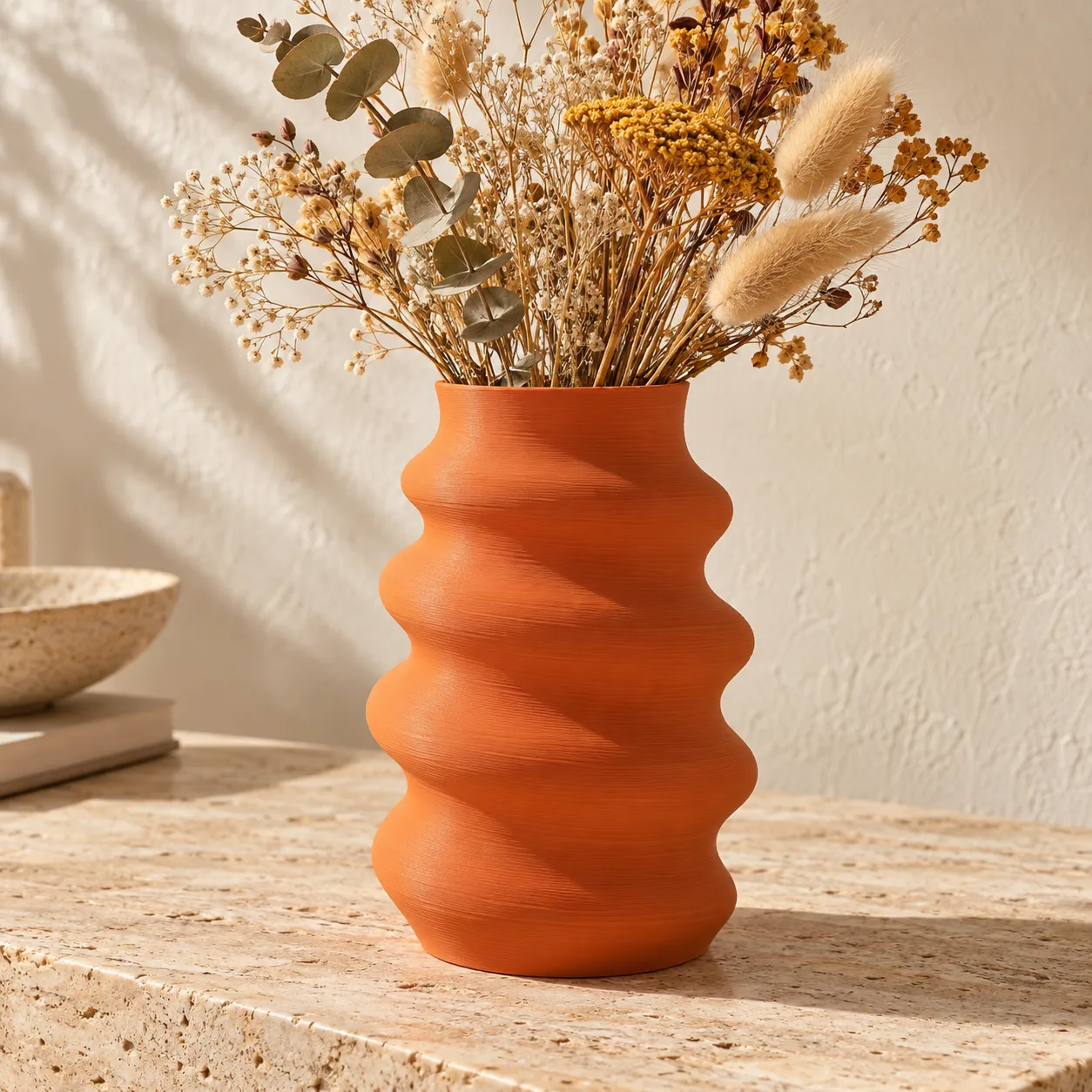
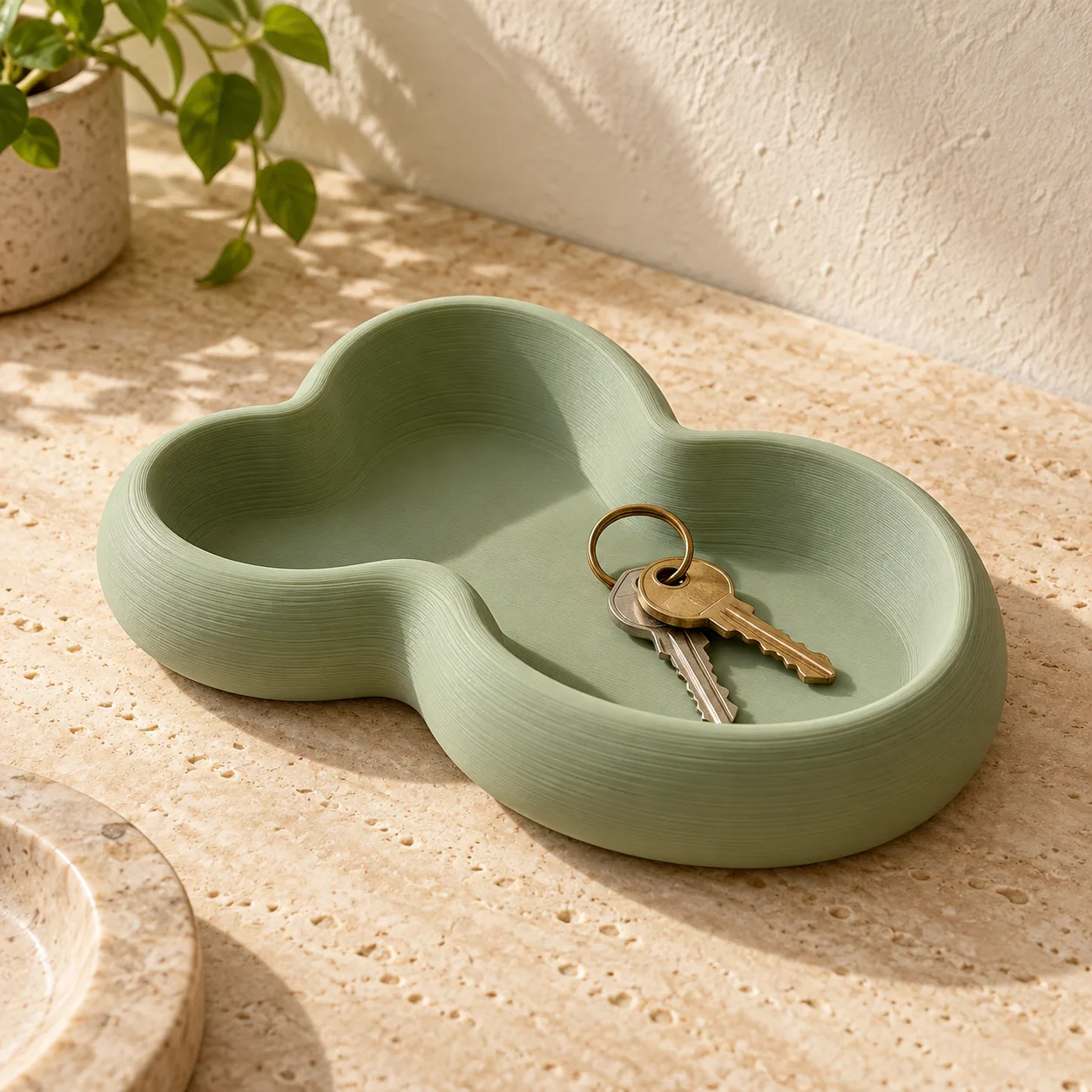
How 3D printed gifts are designed starts as a question about an ordinary shape. Could a vase feel as though it is turning? Could a small tray feel softer without losing its purpose? This is the path each FLOOP object travels, from a rough sketch to a finished form you can hold, whether it is printed, cut from wood, or still being explored.
Sketch: finding the silhouette
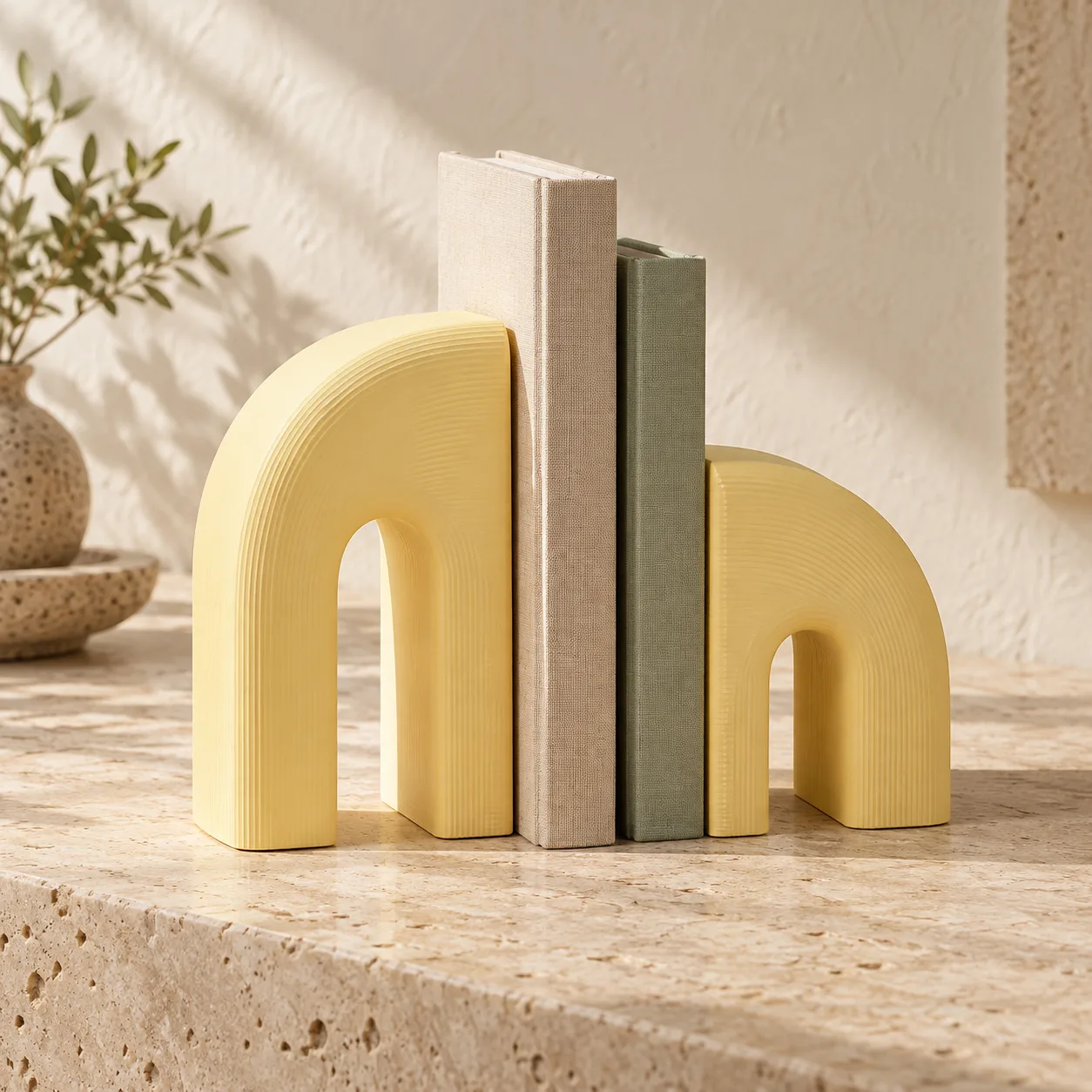
A design begins on paper, where the only job is to find a silhouette worth keeping. We draw the same object dozens of times, looking for the version that reads clearly from across a room. A good keepsake has to be recognizable at a glance, the curve of an arch or the ripple of a vase, because personalization works best on a form that is already strong on its own.
Model: checking proportions in 3D
The surviving sketch becomes a digital 3D model. This is where proportions are tested: how thick a wall needs to be for printing or laser cutting, where a name or date will sit, how the object balances on a shelf. For custom pieces, we design the personalization area as part of the model itself, so an engraved name feels designed-in rather than added on.
Make: where assumptions get tested
A physical prototype is where assumptions finally meet reality. Layer by layer, a print reveals what a screen cannot: how an edge feels under a thumb, whether the object sits steadily, what its surface looks like in daylight. A laser-cut wooden piece tests a different set of questions. Does the grain take an engraved name, does the arch hang straight, does the finish feel right? Most designs go through several physical iterations before the form is right.
Where our concepts stand today
The objects shown on this site are still concept studies. The imagery is generated to explore design directions, and each piece will be measured, tested, and photographed as a physical prototype before ordering opens. We will publish confirmed specifications on every product page when those tests are complete.
From this note